Fields and Trails Maintained Year-Round
Brush Hogging in Bluff City for properties with tall grass, overgrown fence lines, and vegetation that limits land access
Tall grass and weeds quickly reclaim open land when routine maintenance stops, making fields unusable and hiding obstacles that create safety concerns. Holston Valley Land and Forestry handles brush hogging across Eastern Tennessee and Southwest Virginia for agricultural parcels, recreational properties, and undeveloped acreage where vegetation control is needed on a recurring or one-time basis. Efficient equipment covers large areas quickly, restoring accessibility and improving the overall appearance of the property without requiring manual labor or multiple passes.
Brush hogging cuts through dense grass, brush, and light vegetation that standard mowing equipment cannot handle. The service maintains fence lines, roadways, trails, and open fields, preventing overgrowth from becoming a larger clearing project later. Properties with uneven terrain or areas prone to rapid regrowth benefit from the durability and cutting power of commercial-grade brush hog equipment.
Request an estimate for recurring seasonal maintenance or a single clearing session based on current property conditions.
Why Routine Vegetation Control Matters
Vegetation left unchecked creates more than just aesthetic problems—it hides property lines, harbors pests, and increases the risk of tick populations in areas where people and animals travel. Regular brush hogging prevents these issues by maintaining clear boundaries and reducing the density of tall grass where ticks and other pests thrive. The equipment handles slopes, uneven ground, and areas with scattered debris that would damage lighter mowing machines.
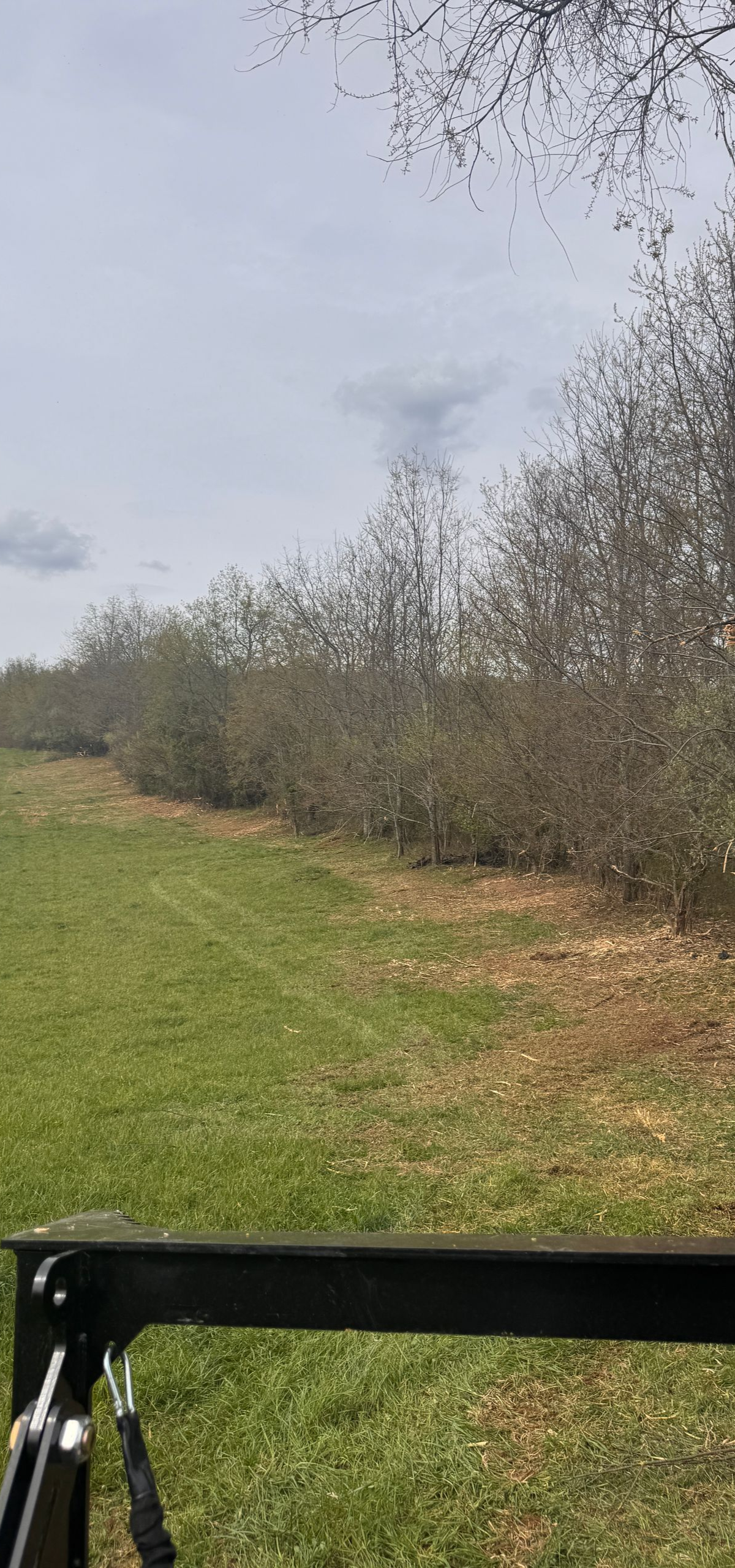
Once brush hogging is finished, the property looks clean and managed rather than neglected or abandoned. Trails become easier to navigate, fence lines are visible again, and open fields return to functional condition. The difference is especially noticeable on properties where vegetation had grown waist-high or taller before maintenance resumed.
Brush hogging focuses on vegetation control and does not include debris removal, grading, or tree work. Properties requiring additional land management services can coordinate those alongside vegetation maintenance to address multiple issues in a single visit.
Questions Property Owners Frequently Have
Owners of larger parcels across Eastern Tennessee and Southwest Virginia often need clarity on what brush hogging accomplishes and how it differs from other vegetation management approaches.
What type of vegetation can brush hogging handle?
Brush hogs cut through tall grass, weeds, brambles, and light brush up to a few inches in diameter, though they are not designed for saplings or woody vegetation requiring forestry equipment.
How often should properties be brush hogged?
Most properties benefit from brush hogging once or twice per growing season depending on rainfall, soil fertility, and how quickly vegetation regrows in that area.
Why use a brush hog instead of a standard mower?
Brush hogs are built to handle rough terrain, thick vegetation, and hidden obstacles like rocks or stumps that would damage residential mowing equipment.
What happens to the cut vegetation after hogging?
The vegetation is cut and left on the ground to decompose naturally, similar to mulch, rather than being collected or removed from the site.
How quickly can large areas be maintained?
Commercial brush hogging equipment covers several acres per day depending on terrain and vegetation density, making it a cost-effective solution for properties where manual clearing would take significantly longer.
Holston Valley Land and Forestry provides straightforward pricing and scheduling for both one-time clearing and seasonal maintenance contracts. Contact the team at (423) 268-1316 to discuss acreage size and maintenance frequency suited to your property's needs.